

EVA ZETHRAEUS' TOILERS OF THE SEAText by Christopher Squier
March 30, 2026

Eva Zethraeus
in Shimmering Real
at HB381 Gallery
March 6 – April 30, 2026

In our spectral contemplation a life other than our own, made up of ourselves and of something else, forms and disintegrates; and the sleeper— not wholly aware, not quite unconscious— catches a glimpse of these strange forms of animal life, these extraordinary vegetations, these pallid beings, ghastly or smiling, these larvae, these masks, these faces, these hydras, these confusions, this moonlight without a moon, these dark decompositions of wonder, these growths and shrinkings in a dense obscurity, these floating forms in the shadows, all this mystery that we call dreaming and that in fact is the approach of an invisible reality. The dream world is the aquarium of night.
—Victor Hugo [The Toilers of the Sea, 1866, pp. 82– 83]
[Les Travailleurs de la mer (Paris: Hugues, 1883)]
Eva Zethraeus (Swedish, b. 1971) is a ceramic artist based in Gothenburg, Sweden. Working primarily in porcelain, she creates exquisite and tenuous biomorphic sculptures inspired by marine life, Japanese Zen Buddhist gardens, and the extraordinary relation of viruses to our own organisms. Zethraeus’ works examine the phenomena of life cycles and replication with an eye for the unpredictable variances that occur. They are not only wholly realized individual objects, but also suggest the greater context of an immersive environment, the Umwelt within which an organism lives and perceives its actions. Within this imaginary, she constructs intricate forms that encapsulate the complex manner in which organisms grow and evolve. Each individual component of a piece is hand-thrown; the work is then assembled and subsequently undergoes a number of glazings and firings to achieve its finished state. Zethraeus, herself deeply rooted in the field of ceramics and its technical demands, describes her approach to structure: “My sculptures are the result of an ongoing research of form and the complicated nature of the ceramic process. They connect to the fragile interdependencies that structure living systems.”
Drawing on the logic of landscape and the taxonomies of natural spaces, Zethraeus’ porcelain sculptures could be said to inhabit a garden of forking paths. Their spiraling and elongated arms bifurcate, coil, and extend into space as though imbued with a wandering consciousness. Each of her intricately modeled creations, often gathering small wheel-thrown elements together in radial symmetry around a central sphere, are formed from alternately sinuous, helical, bulbous, and tendrillar appendages. Their confusion of limbs and tendrils extend into space, mirroring familiar somatic gestures of the body. As all organisms are more than the sum of their parts, so these sculptures, built piecemeal on the pottery wheel and adhered into a single form with care and clay slip, exhibit a collective capacity for dynamism en masse; visually, they seem to move in tandem, swaying and drifting. They resemble the category of organisms that relies primarily on tactile stimuli, reacting to sensory feedback from haptic processes to understand their surroundings. As such, Zethraeus draws a link long understood to exist in linguistics between prehension — touching, holding, and grasping — and comprehension. Images might lie, but touch speaks to directly perceived reality.

Rather than representing other species in a straightforward repetition of the natural world, Zethraeus attends to the possibilities of biological life and its inherent processes: growth, subdivision, regeneration, and mutation. These biological processes mirror those of the ceramics studio, enacting clay’s malleability, its constant reiteration of age-old forms amid constant variation, its relationship to manual labor, and the familiar references each work of pottery bears to the human body. Zethraeus’ moment of clarity comes in the refiguring of this oft-repeated allegory of the clay “body,” transferring it to an entirely new order of organisms.
Zethraeus’ practice represents a distinct inquiry into the sprawling interplay of structure and disarray, repetition and variation, symbiosis and antagonism which is found across innumerable species of biological life. Her studio for many years has been located within within the Konstepidemin, an artist-run studio in Gothenburg that occupies the historic site of an epidemic hospital from 1884. Perhaps it is unsurprising, then, that she finds her sources in the vertiginous, microscopic spheres of the intensely small: viral processes of replication, diatoms and single-celled organisms, medusa-like blood platelets and torus-shaped red blood cells. Simultaneously, she looks at more discernibly visible yet no less unfamiliar referents, from the silken reproductive structures of Calliandra flowers to the branching arms of sea anemones and urchins and the distributed intelligence of an octopus’s grasping tentacles. Zethraeus describes herself as “fascinated by the properties that objects take on when underwater,” describing their slow movements, textures, and the qualities of light as being akin to her deliberate, contemplative process. The result is a vast taxonomy of wild and wayward specimens whose endless permutations would transgress every categorical definition from Borges’ Celestial Emporium of Benevolent Knowledge. Nevertheless, each of Zethraeus’ sculptures suggests the branching lineage of evolutionary history and its unknowable futures. At a moment in which every small increase in global temperature alters the fate of ecosystems with implications for biodiversity and loss of habitat, Zethraeus’ efforts to reveal the grand array of life on earth feel like both an affirmation of wonder and an elegy of loss. As she comments, “My surfaces carry traces of growth, erosion, and accumulation, referencing natural processes without resorting to direct representation. The work occupies a threshold between the organic and the mineral, the intuitive and the controlled.”
Zethraeus is naturally drawn to the mathematics of nature and our attempts to understand it, whether that be in the innumerable subdivisions of fractal patterns in flora, viruses, or material processes and she utilizes the Fibonacci series in organizing spiral motion across the surface of a sculpture. Her recurring references to the interplay of harmony in nature and the irreconcilable relationship between order and chaos embraces the frequently strange experiences of embodiment, which may be as much instinctual as organic and consciously derived, Zethraeus’ organisms seem to represent a counterpoint to the classical repository of curios, the Wunderkammer, which is always haunted by sentient collectibles, half remembered stolen objects, and dessicated animal cadavers. Rather, the organisms generated by Zethraeus’ labor are very much alive, active, peculiar, and otherworldly. It would not come as a surprise to find them torn from a section of Hieronymus Bosch’s great ecclesiastical triptych of poorly behaved chimeras, The Garden of Earthly Delights.
Placing her work in a continuum of experimental ceramicists who have highlighted the multisensory nature of clay prior to and beyond the finished visual form, Zethraeus collaborates with her husband Stefan Zethraeus on musical compositions gathered from the rustle and susurrous of hands brushing against fired clay. Layered and looped sonic compositions hone our attention on this often overlooked auditory environment, translating the volumes of empty space within her sculptures into sonic instruments which produce minute acoustic vibrations akin to wind instruments through which air and sound actively circulate; early whistles, recorders, ocarinas, and flutes often took similar forms in which a sounding cavity or elongated tube was perforated by carefully-placed openings. Like Toshiko Takaezu’s Closed Forms which encase pellets of clay within closed vessels or Clarissa Tossin’s activation of pre Columbian musical artifacts through 3D-printed ceramic replicas, Eva and Stefan Zethraeus recast the experience of ceramics as an active engagement with both vision and sound.
Zethraeus received her MFA from the College for Design and Craft at Gothenburg University. She has exhibited nationally as well as internationally at venues including the Form Design Center, Grimmerhus Keramikmuseum Danmark, Höganäs Museum, Landskrona Konsthall, Nordic House Reykjavik, and the Shigaraki Ceramic Museum. Her work is in the permanent collections of the High Museum of Art, International Ceramic Workshop, KKAM Höganäs Museum, Nationalmuseum Stockholm, Röhsska Museet, and Statens Konstråd, as well as the Swedish Embassies in Brazil, the Czech Republic, and Peru. She received the Westerwald Prize from the Keramikmuseum Westerwald.
Image captions:
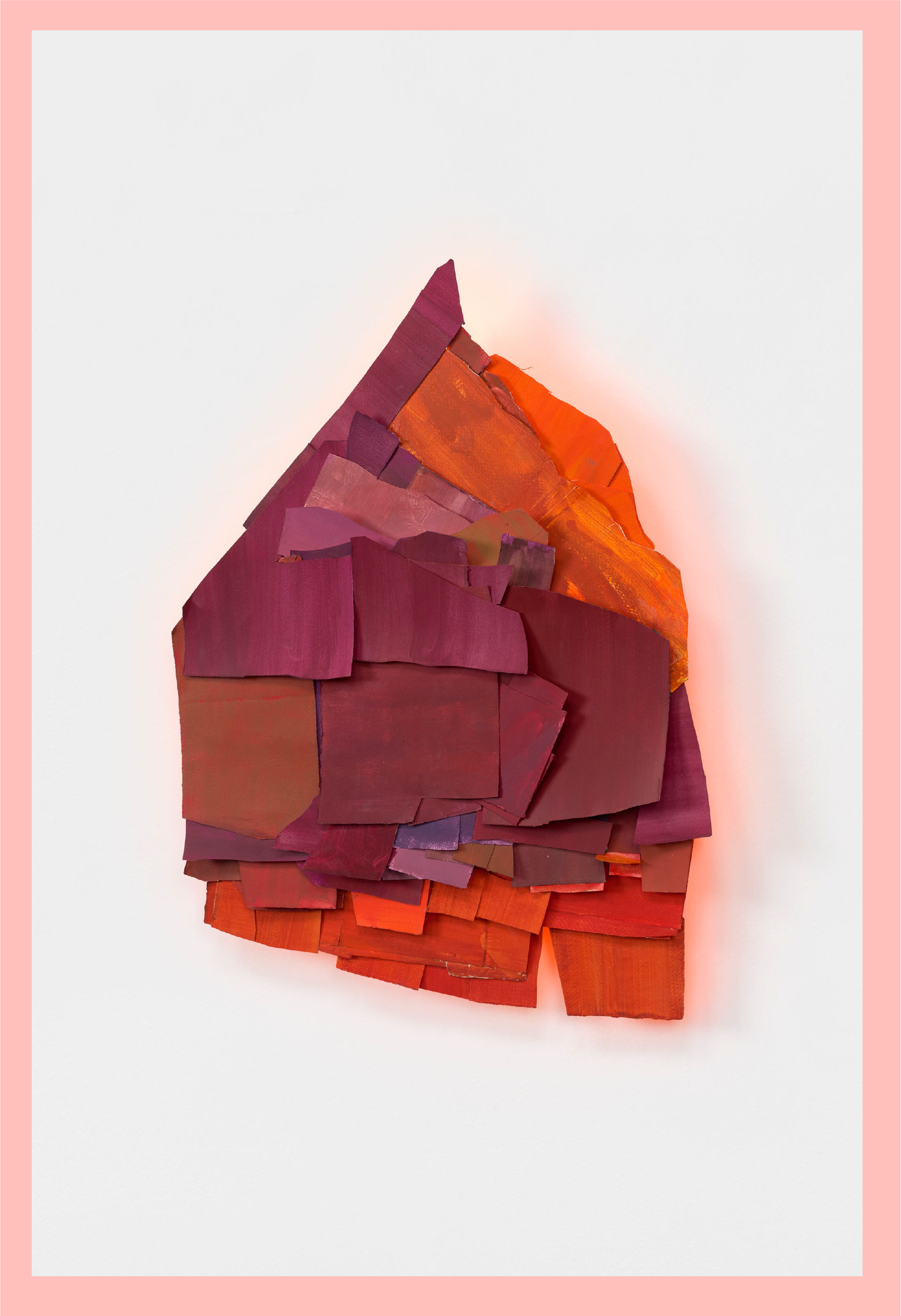
[1] Michel Gérard, Sc., 1980. Pen, crayon, and acrylic on paper. 22 x 30 inches
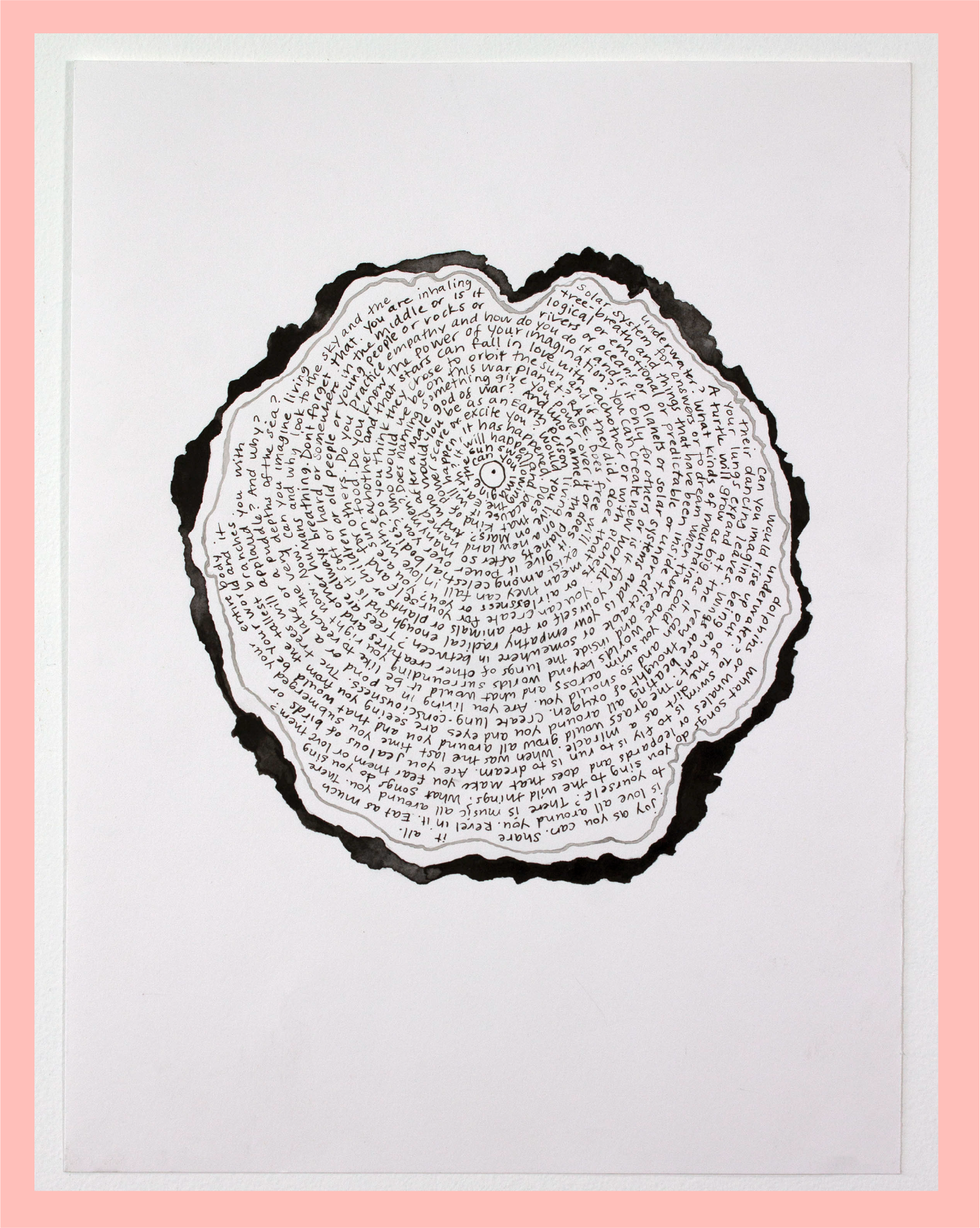
[2] Caroline Magis Weinberg, Reiterate, 2014. Inkjet print on paper. 16 x 20 inches
Evan Brownstein, Untitled(tell me what you want me to do to you), 2026 ☆☆☆
Evan Brownstein, Untitled(the hole in the heart of the main character), 2026 ☆☆
Evan Brownstein, Untitled(to hobble the strawberry roan), 2026 ☆
Evan Brownstein, Untitled(spearmint), 2026 †
Evan Brownstein, Untitled(the diegesis), 2026 ✖


