
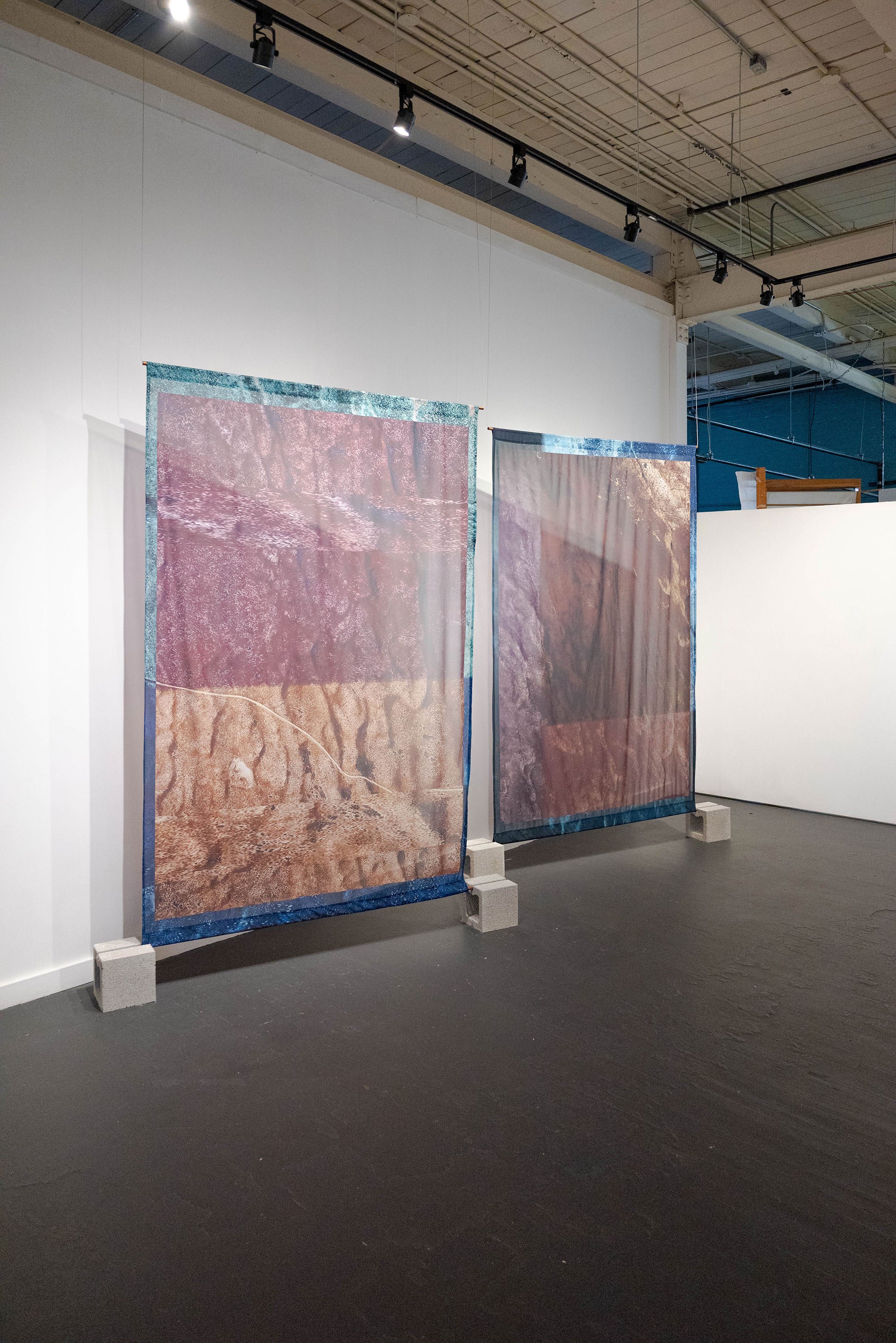
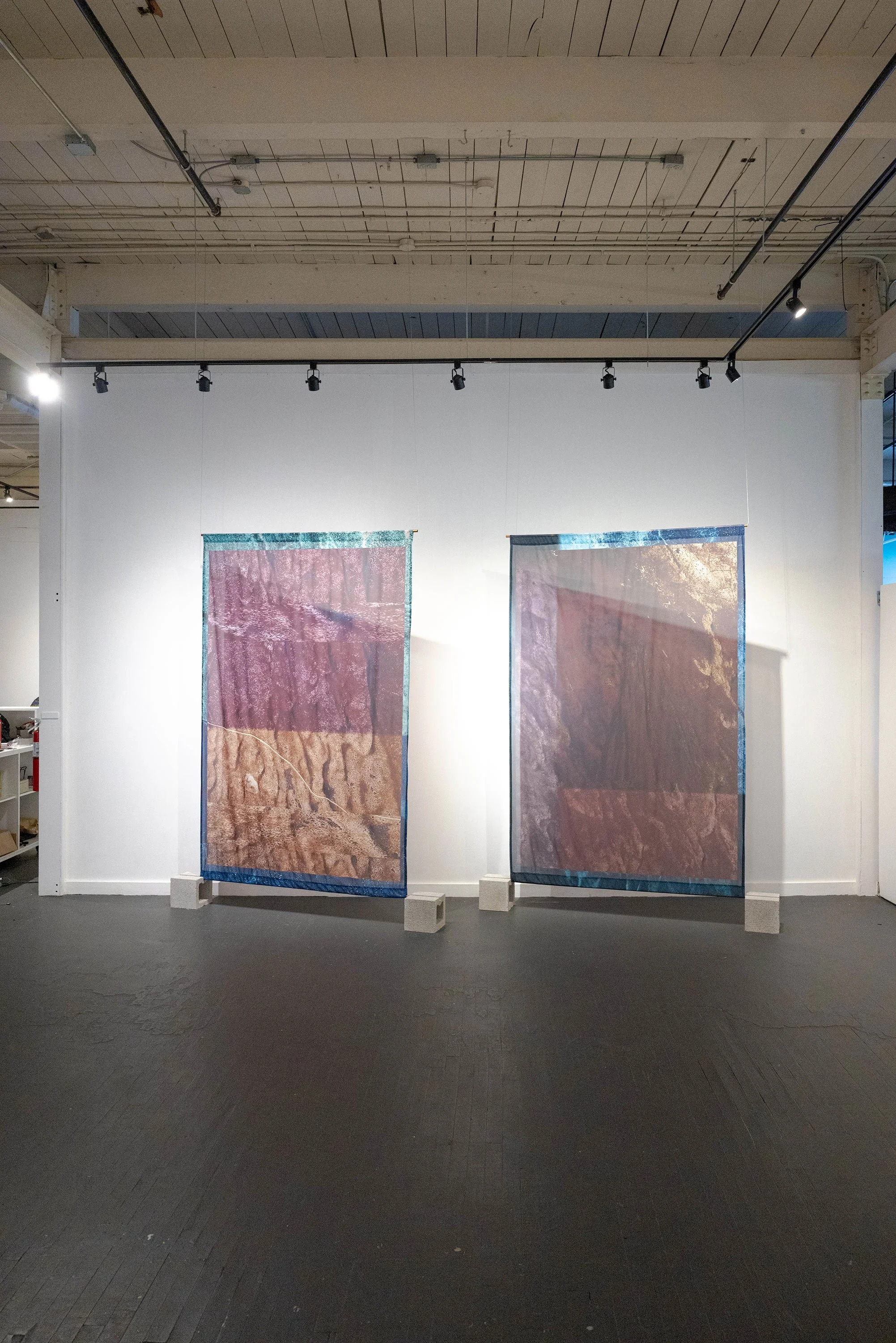
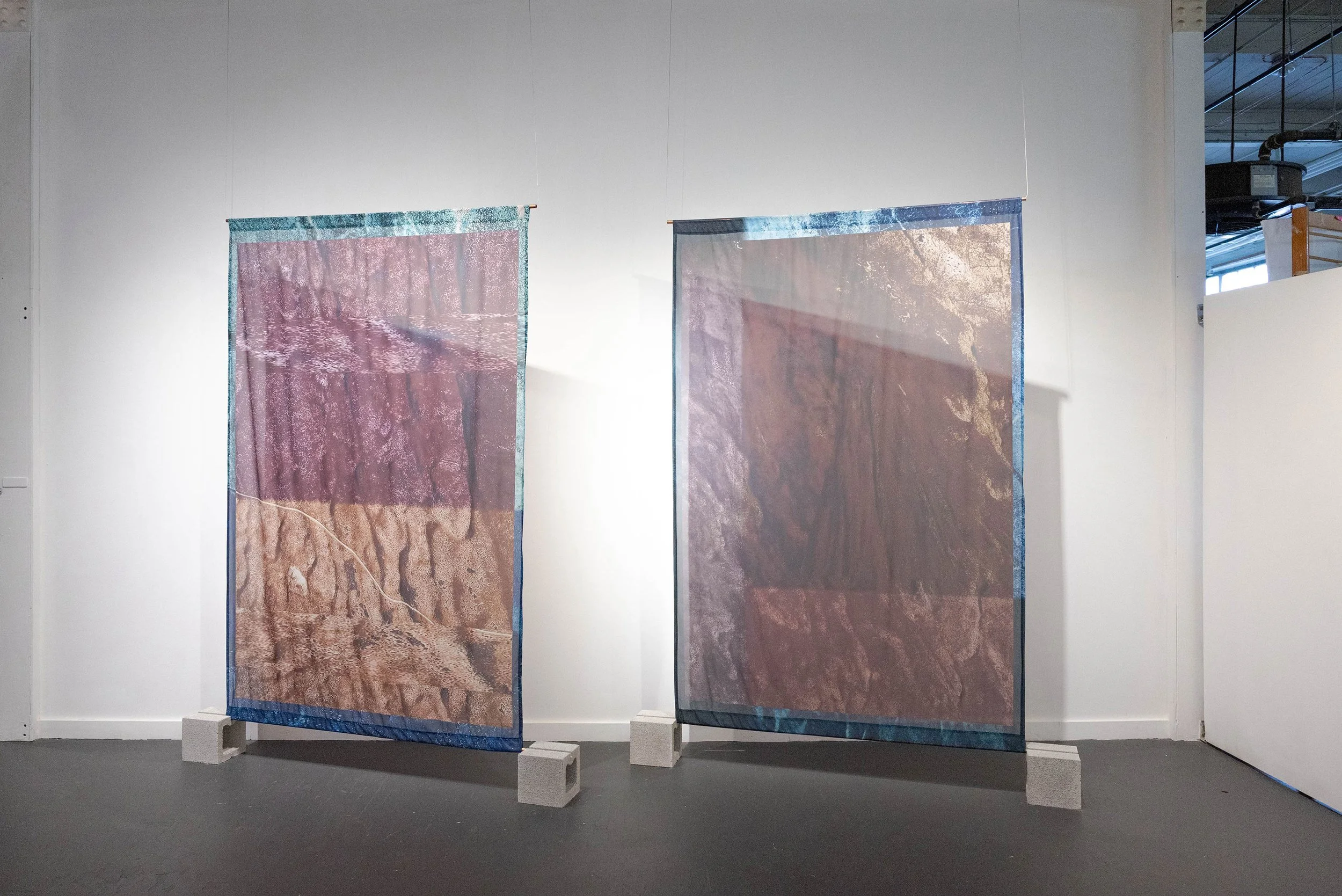
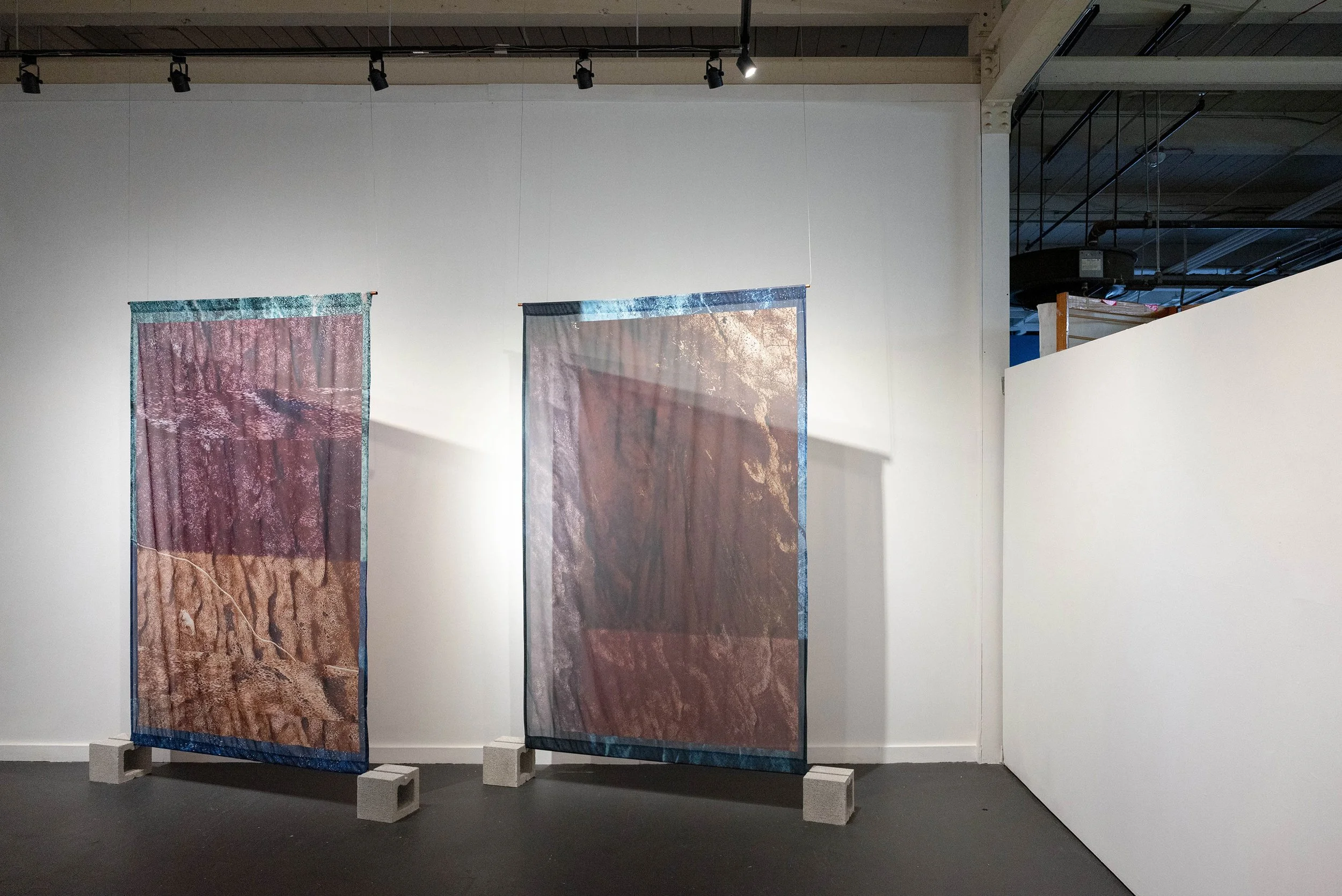
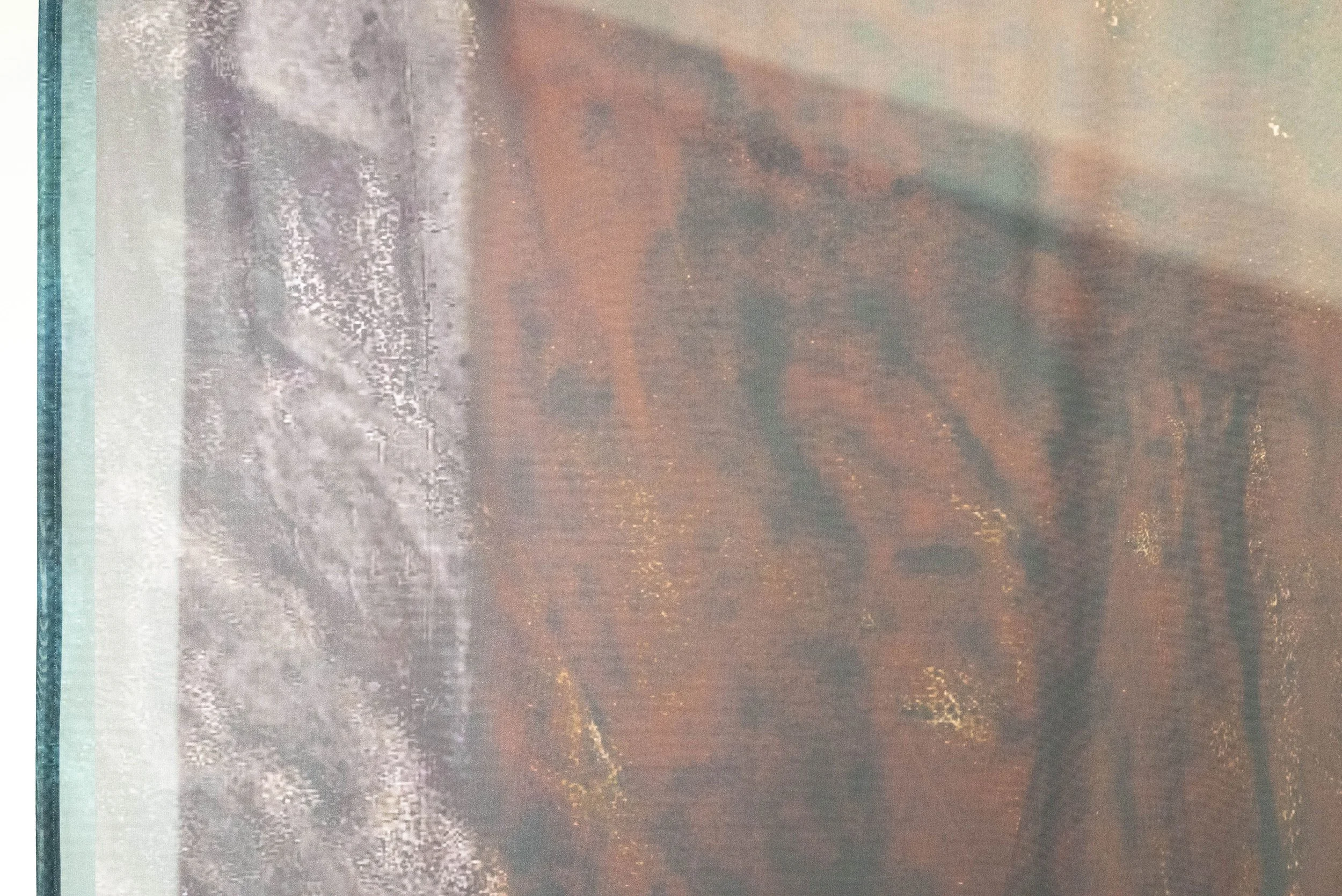
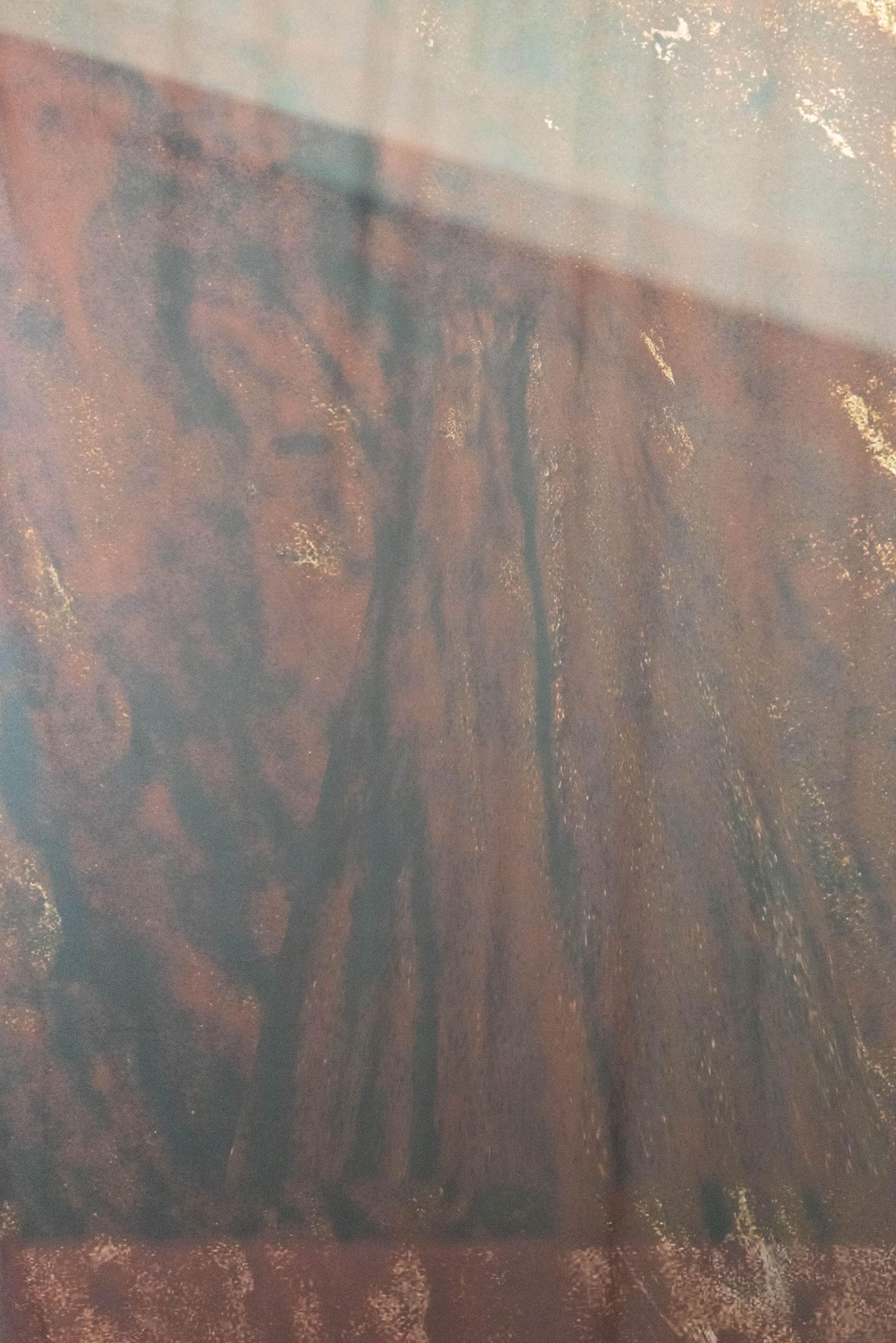
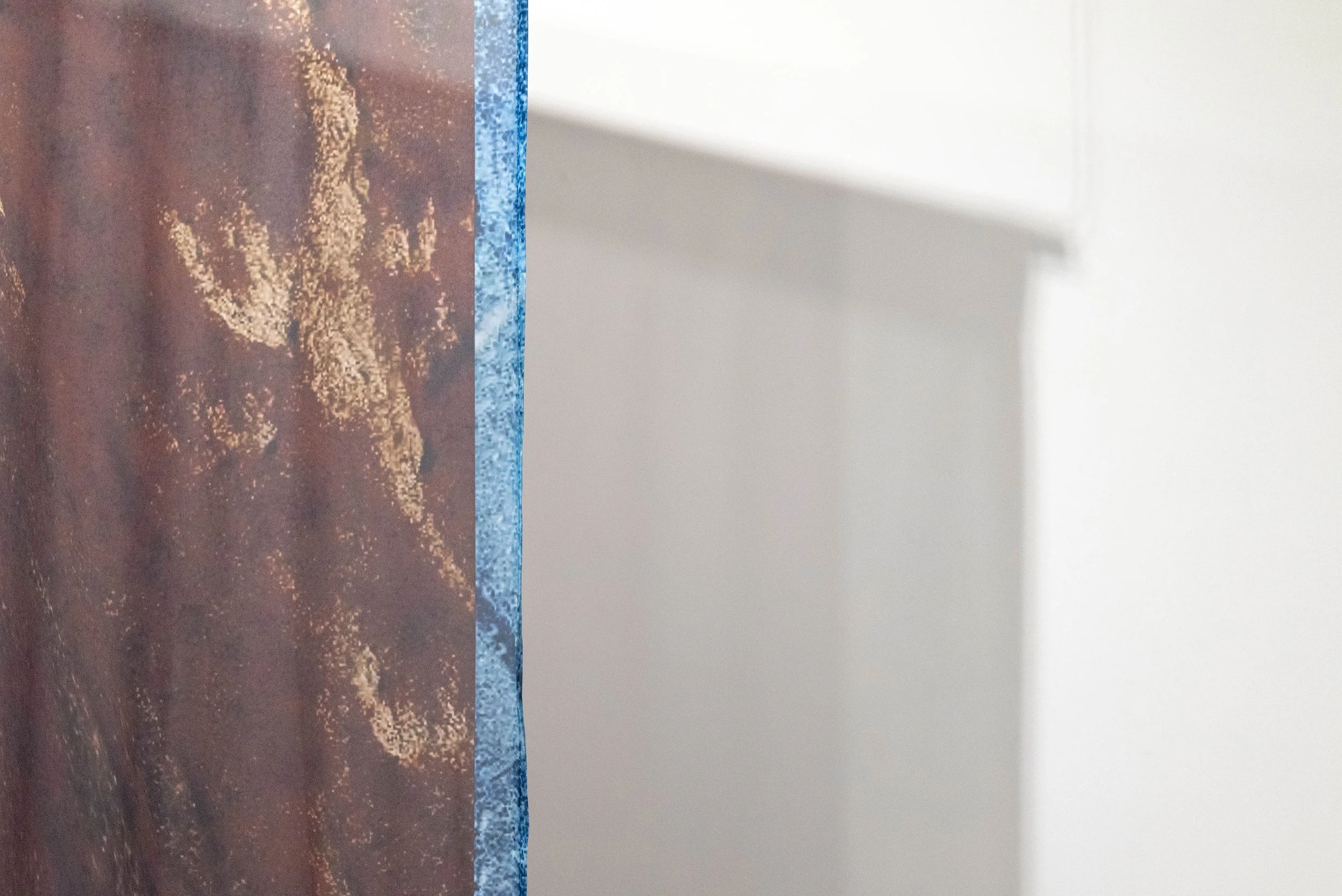
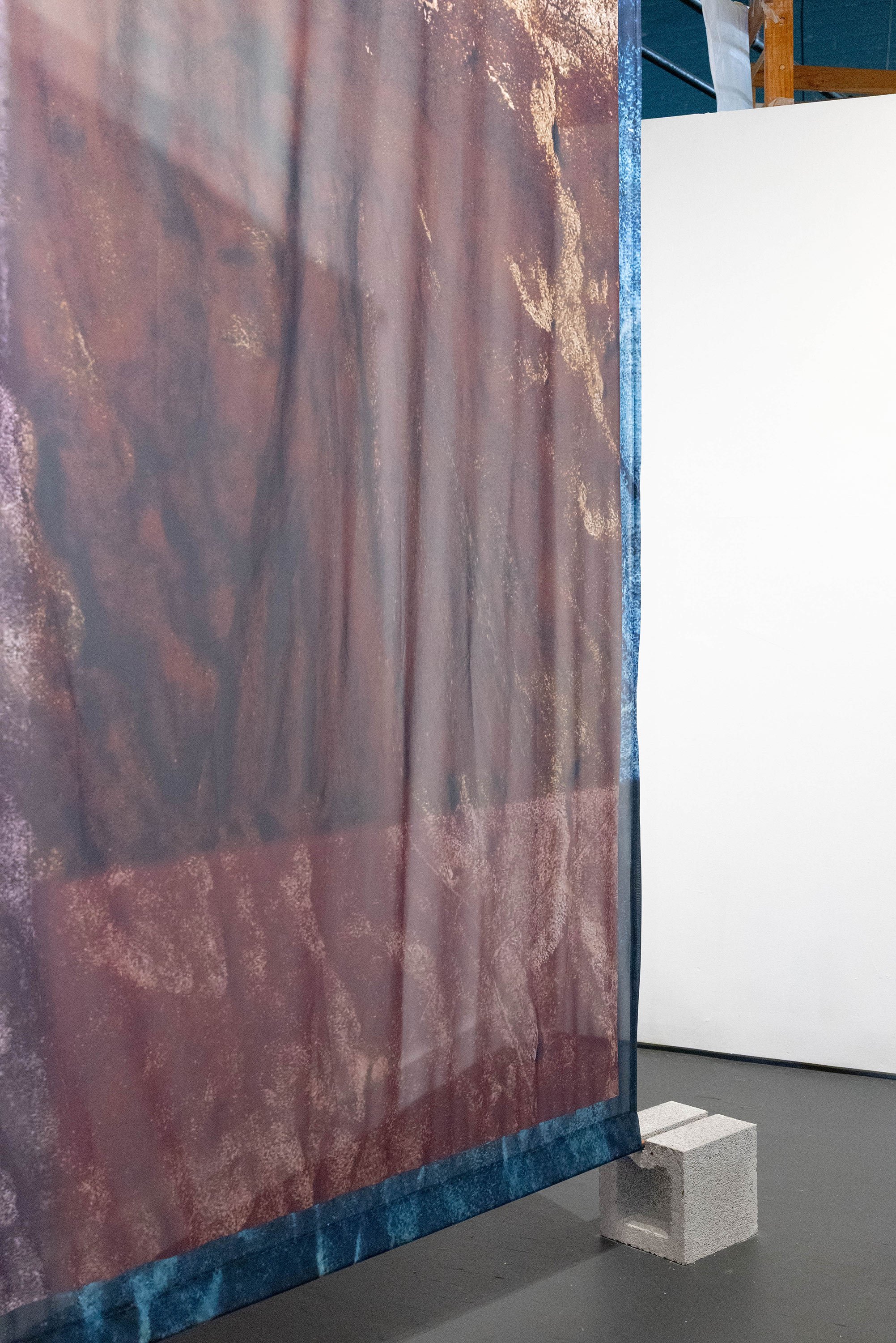
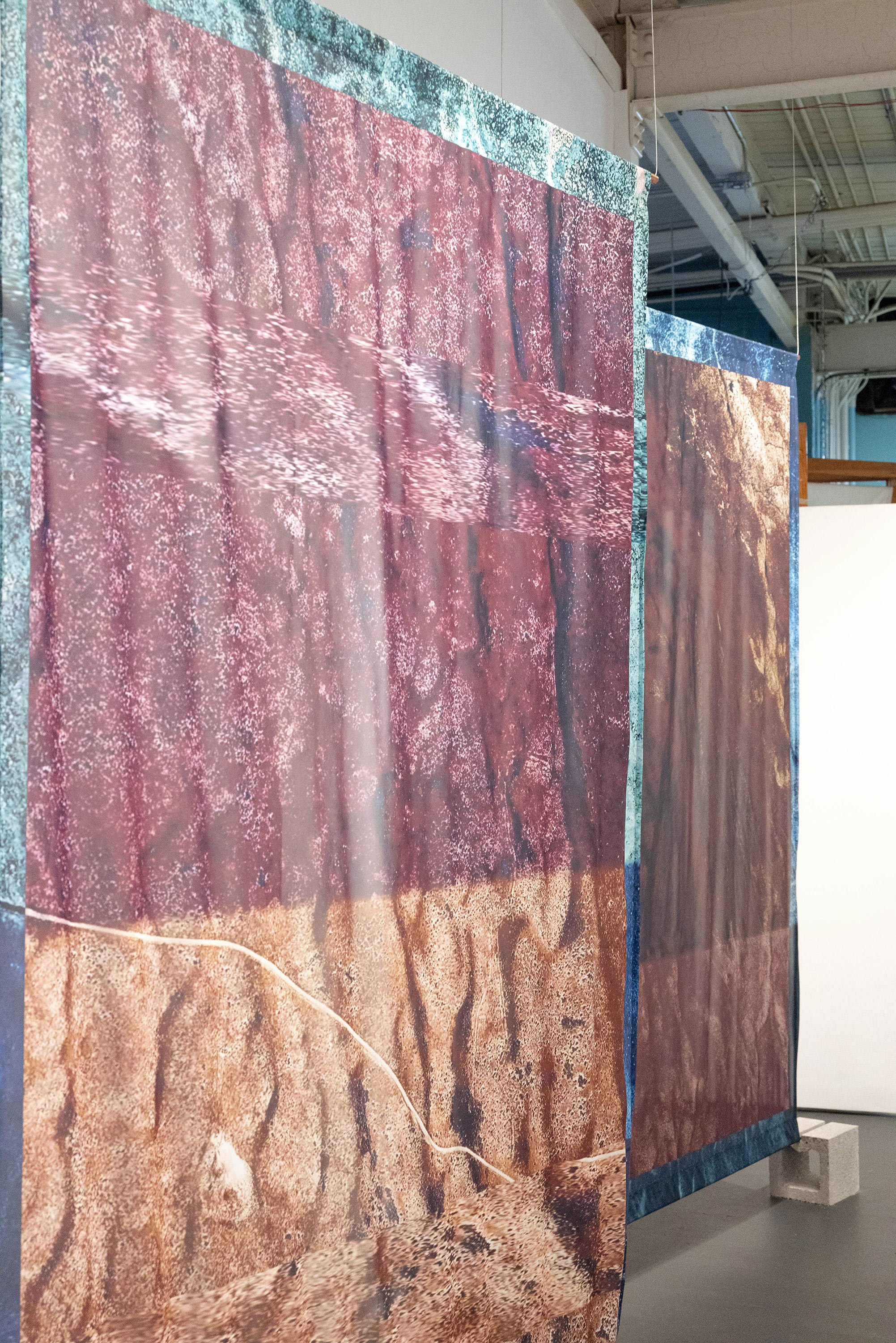
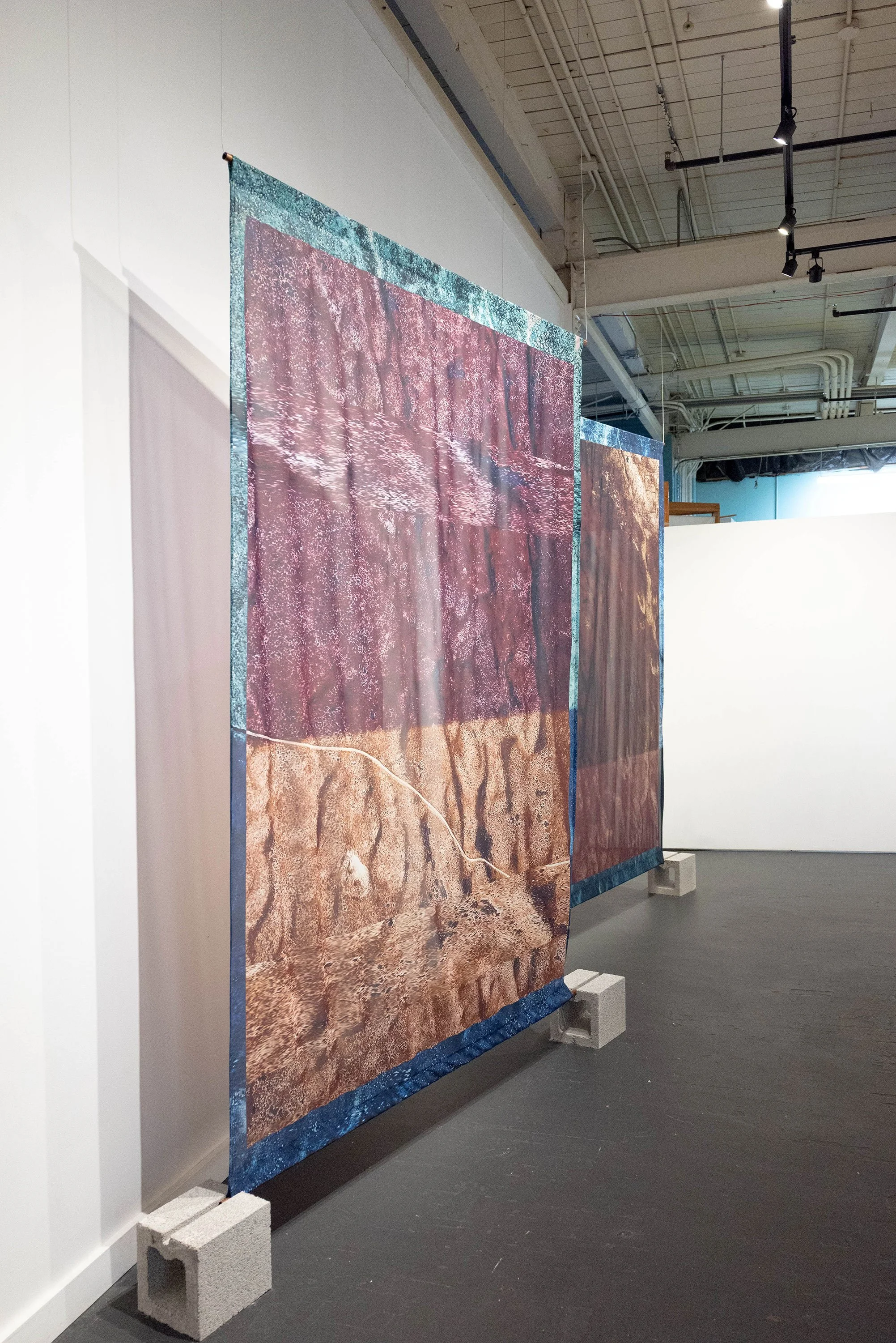
-
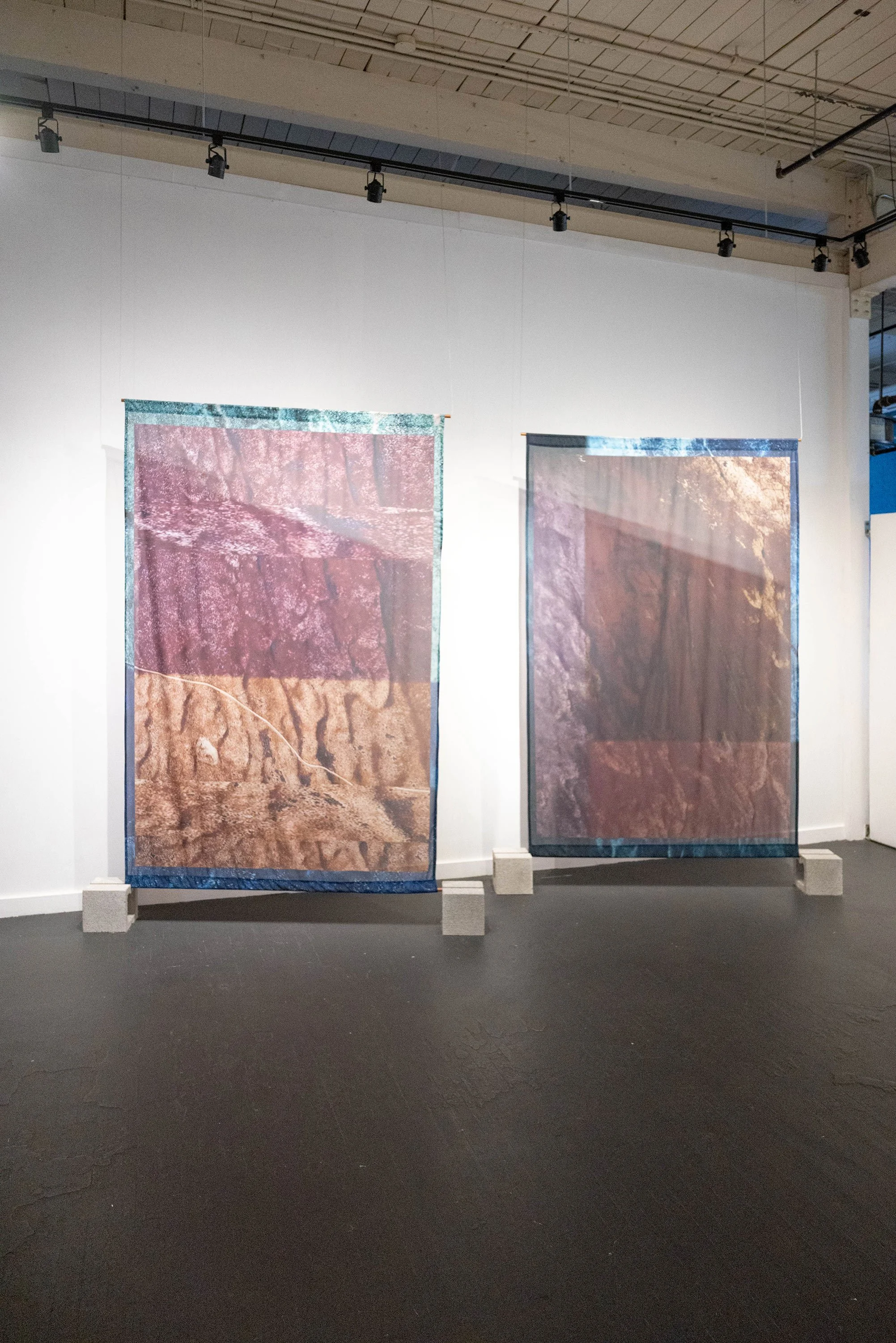
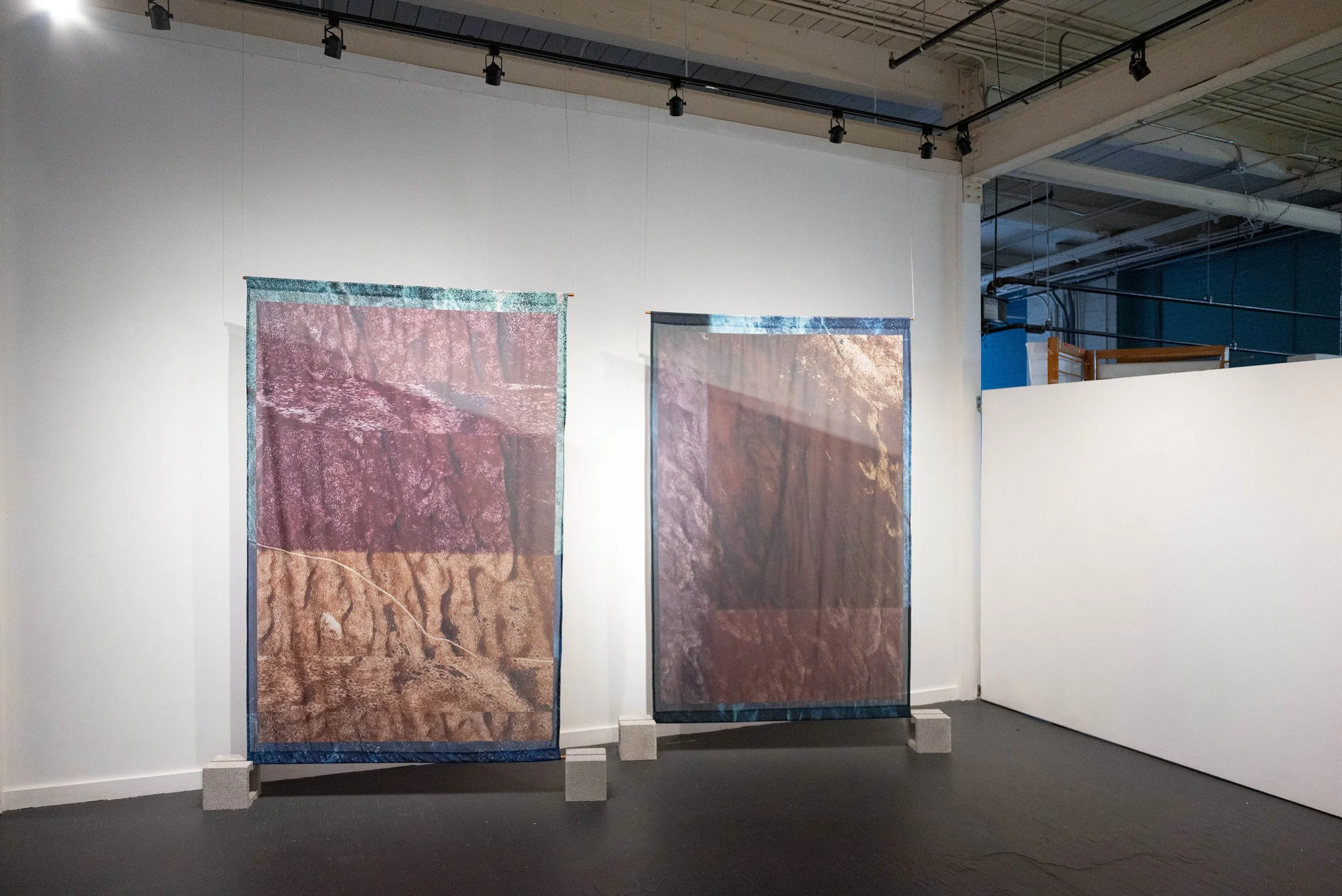
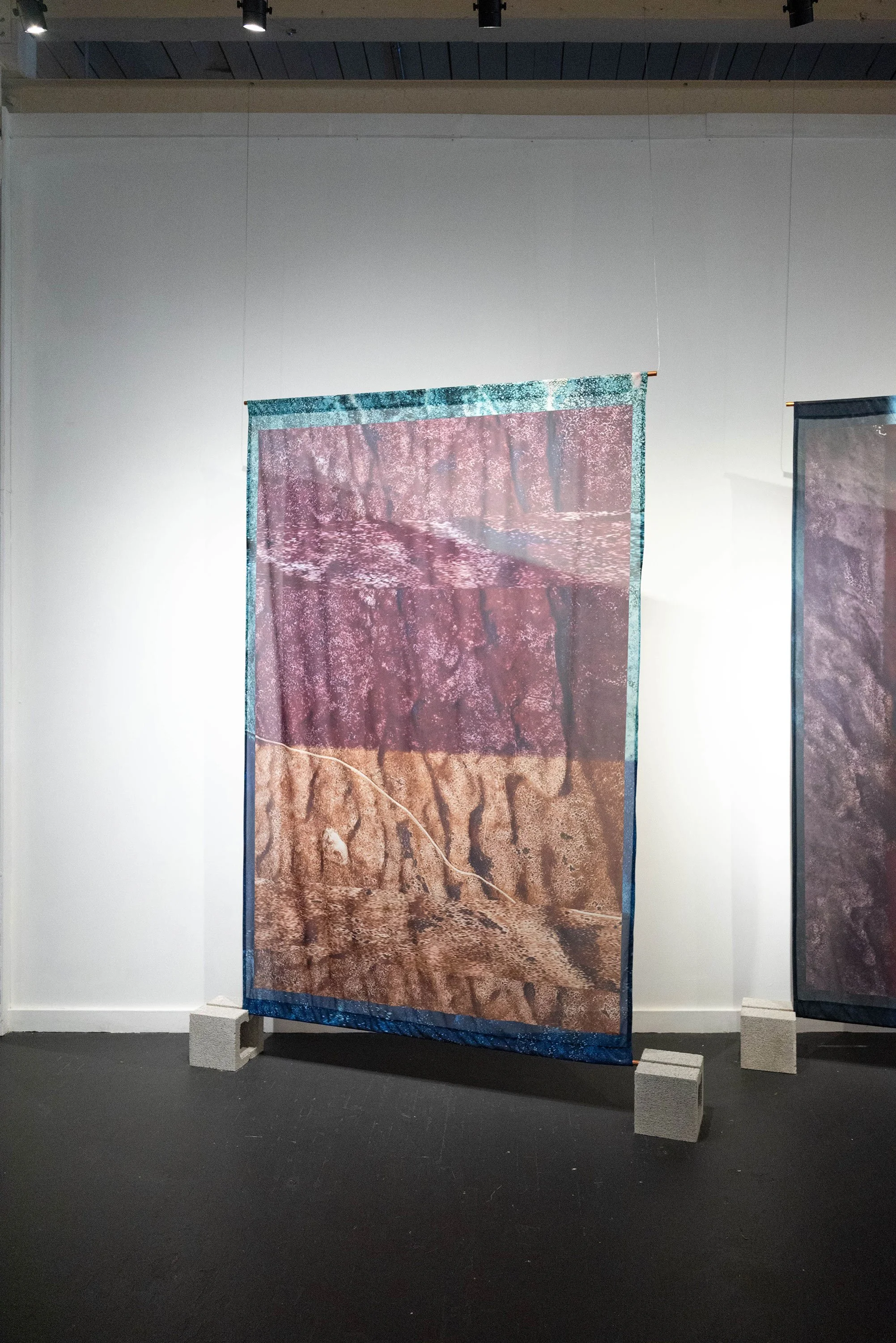
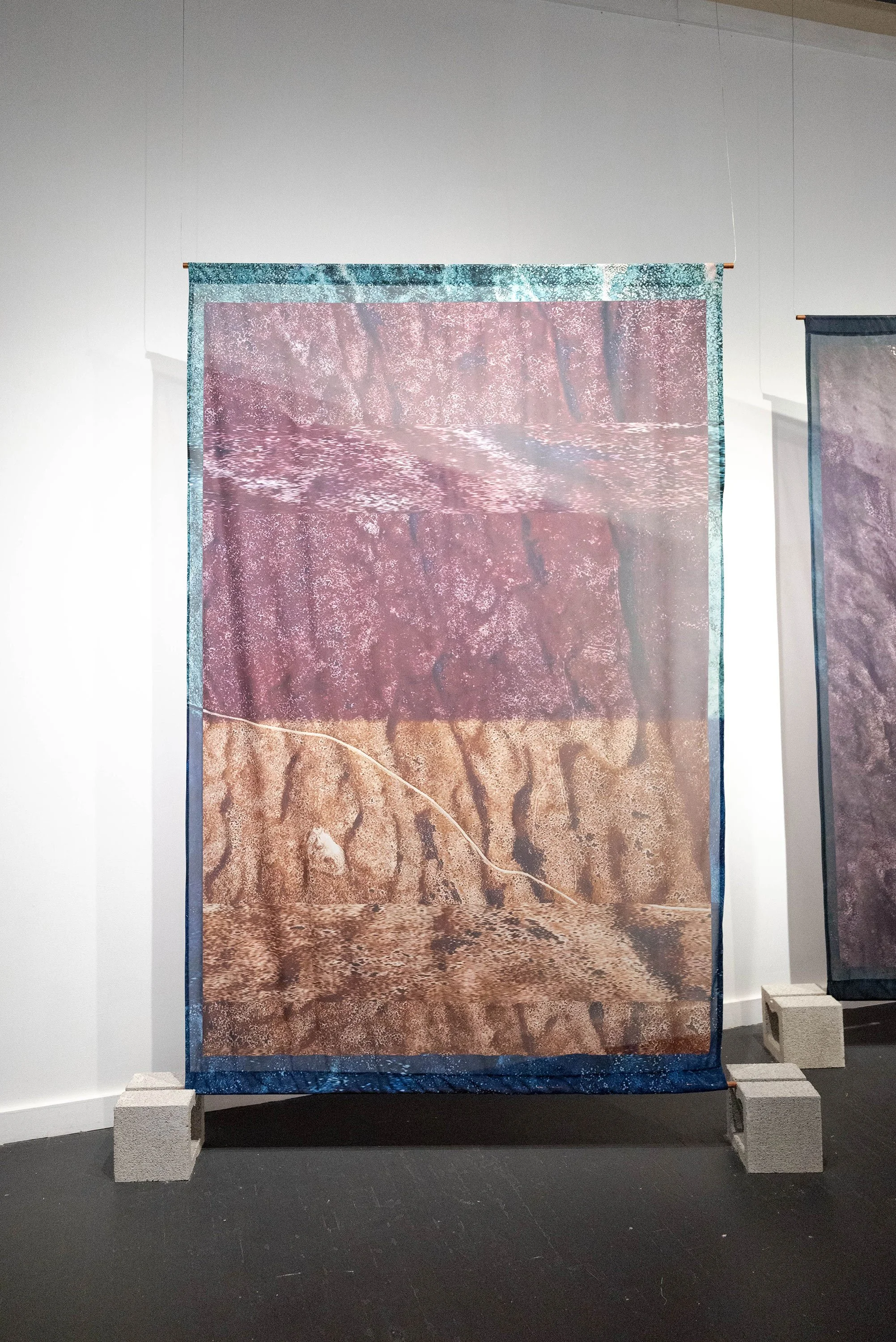
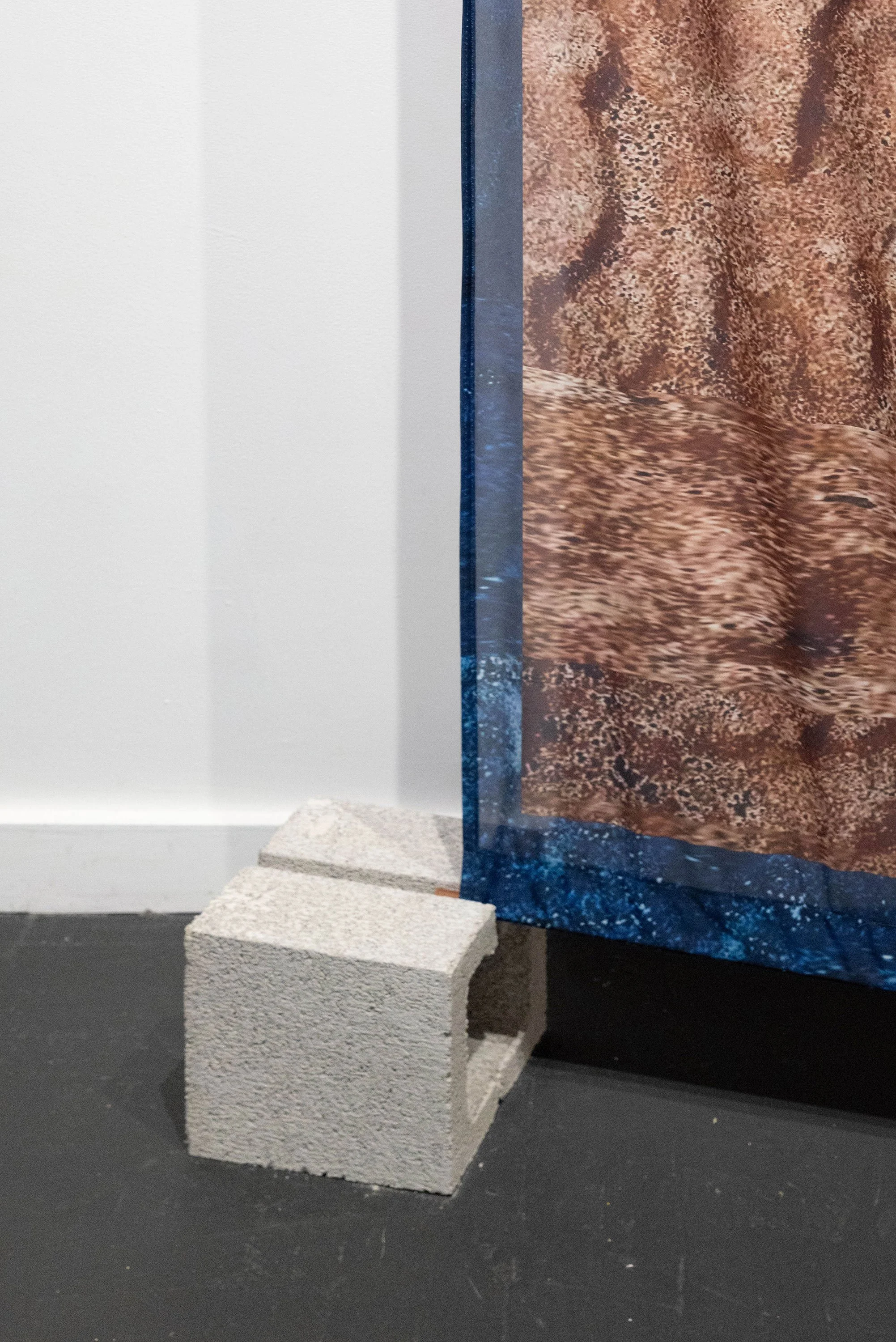
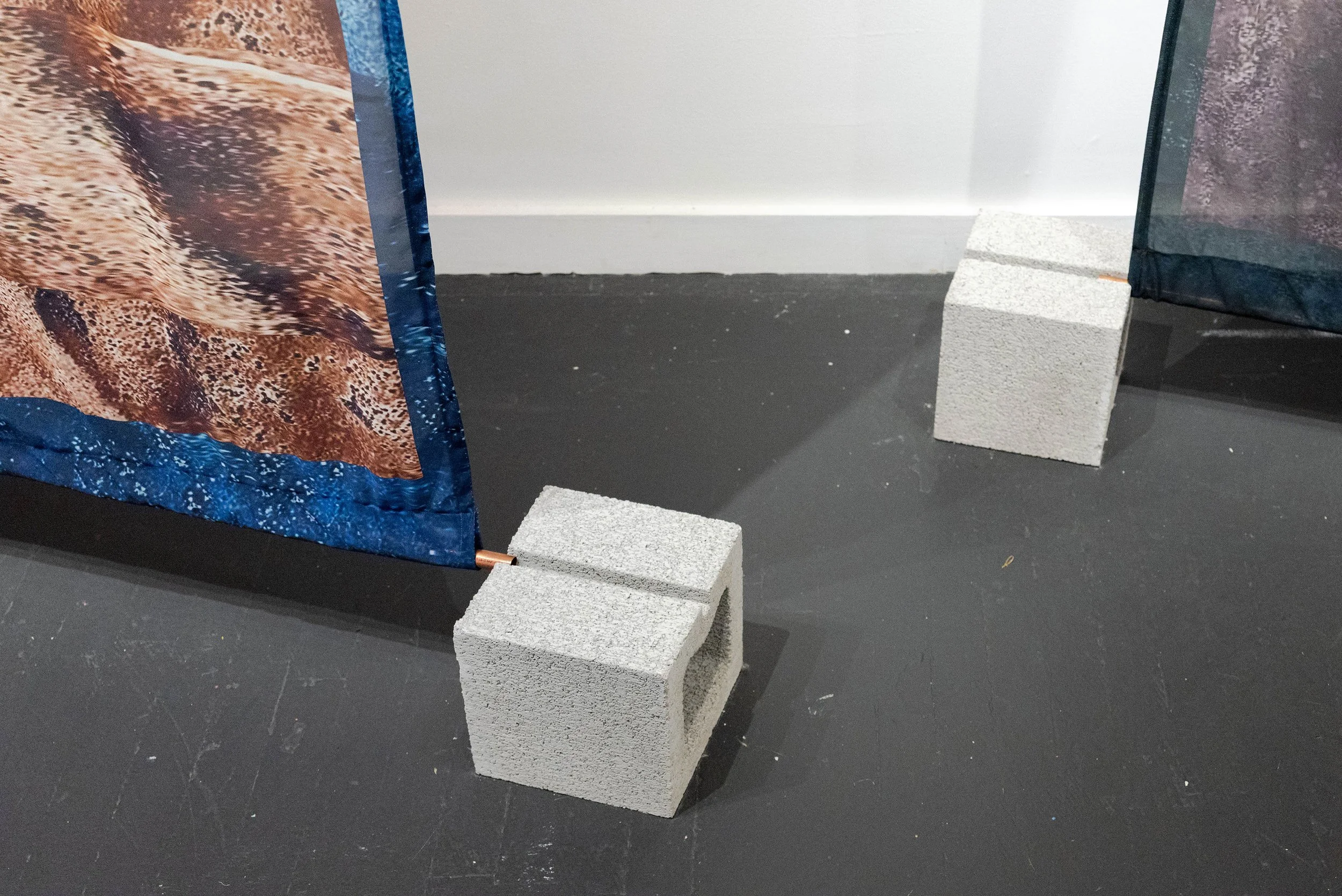
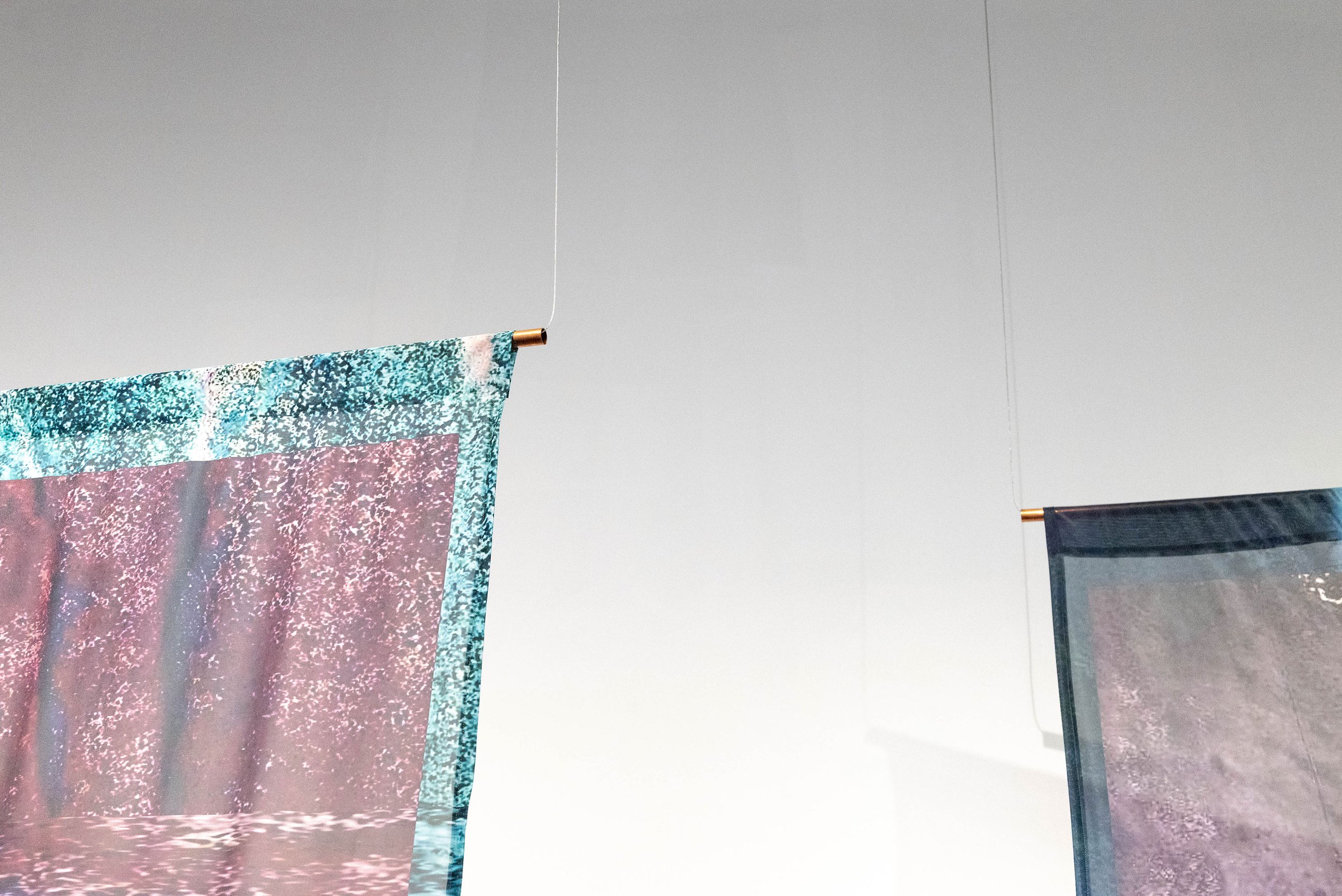
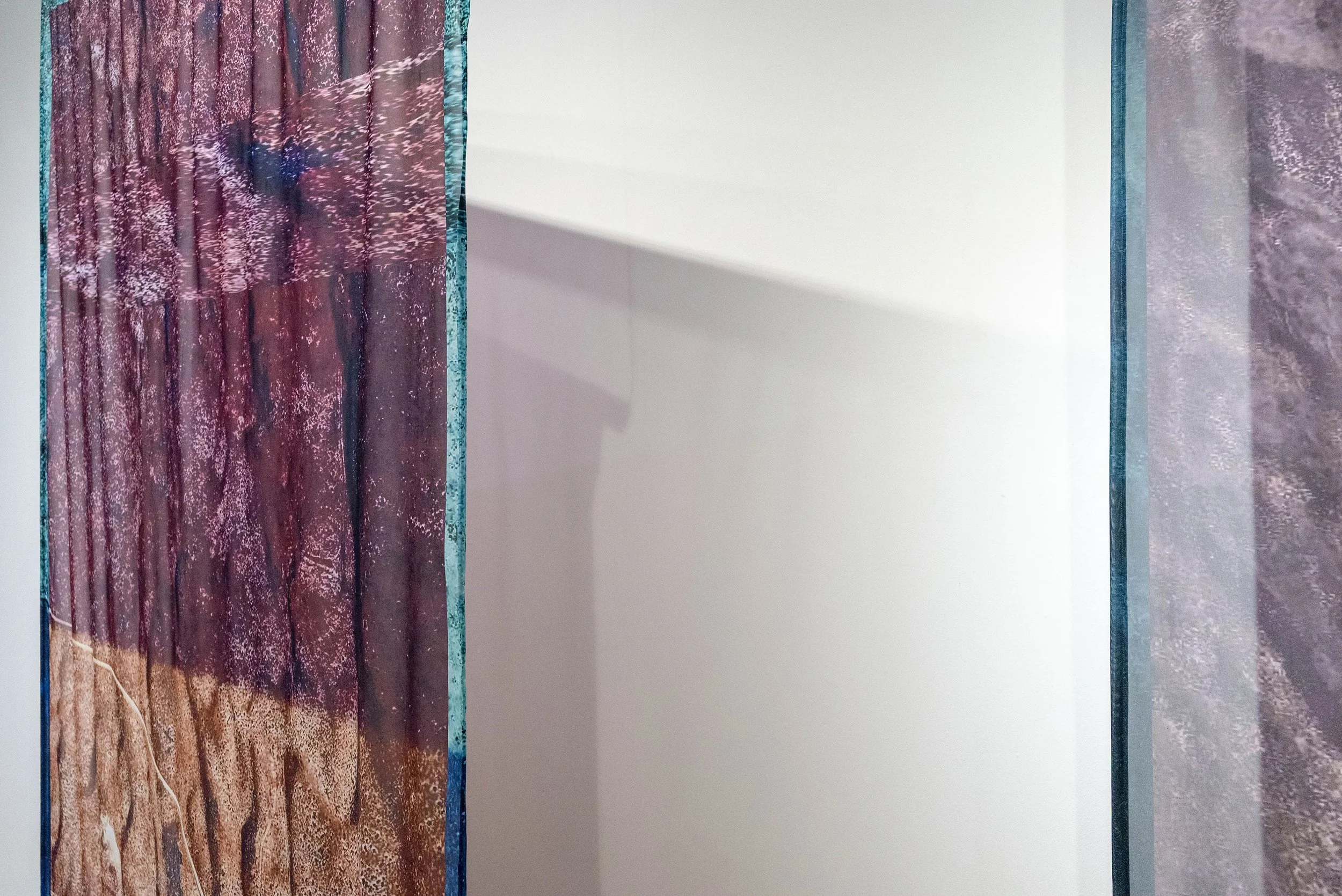
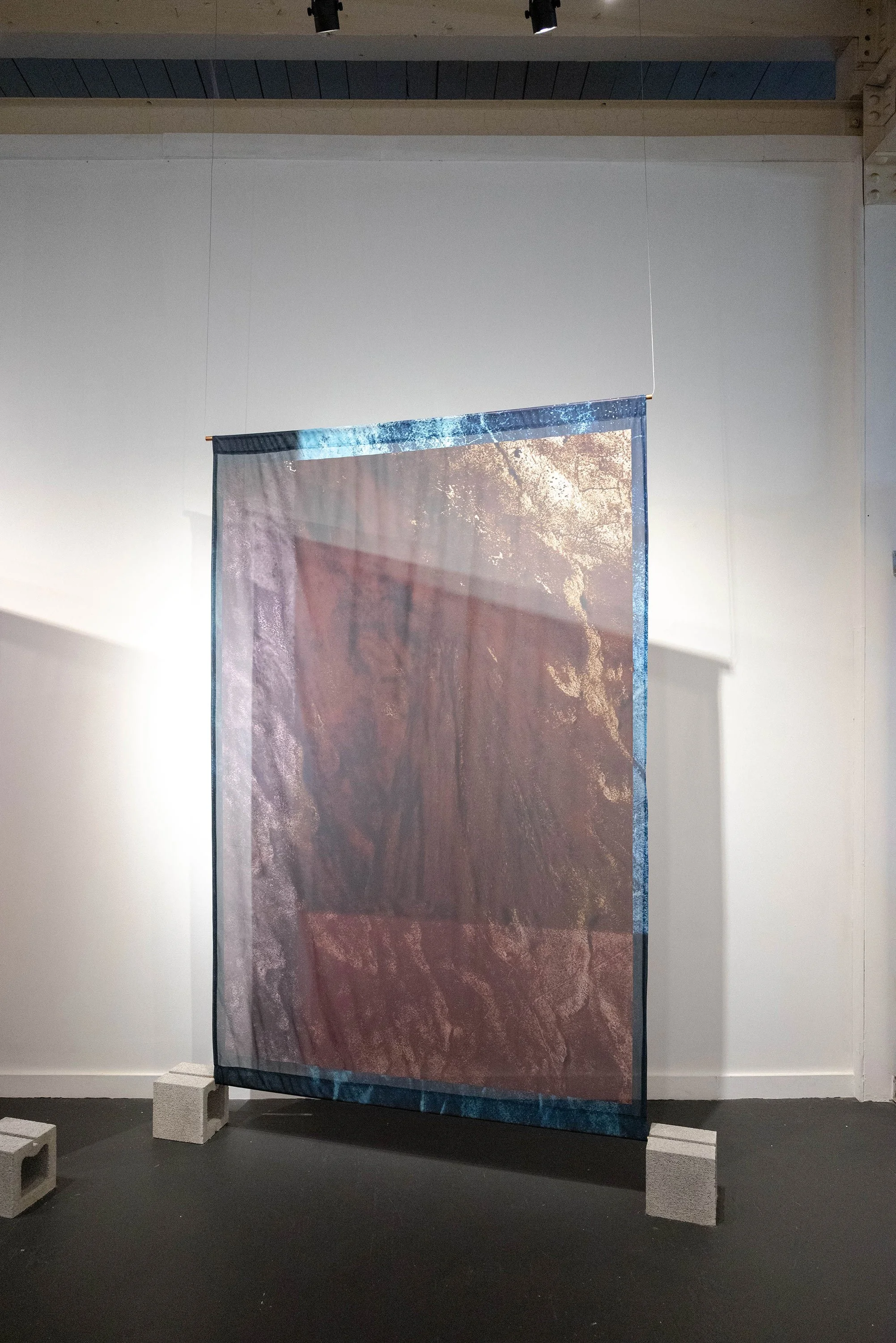
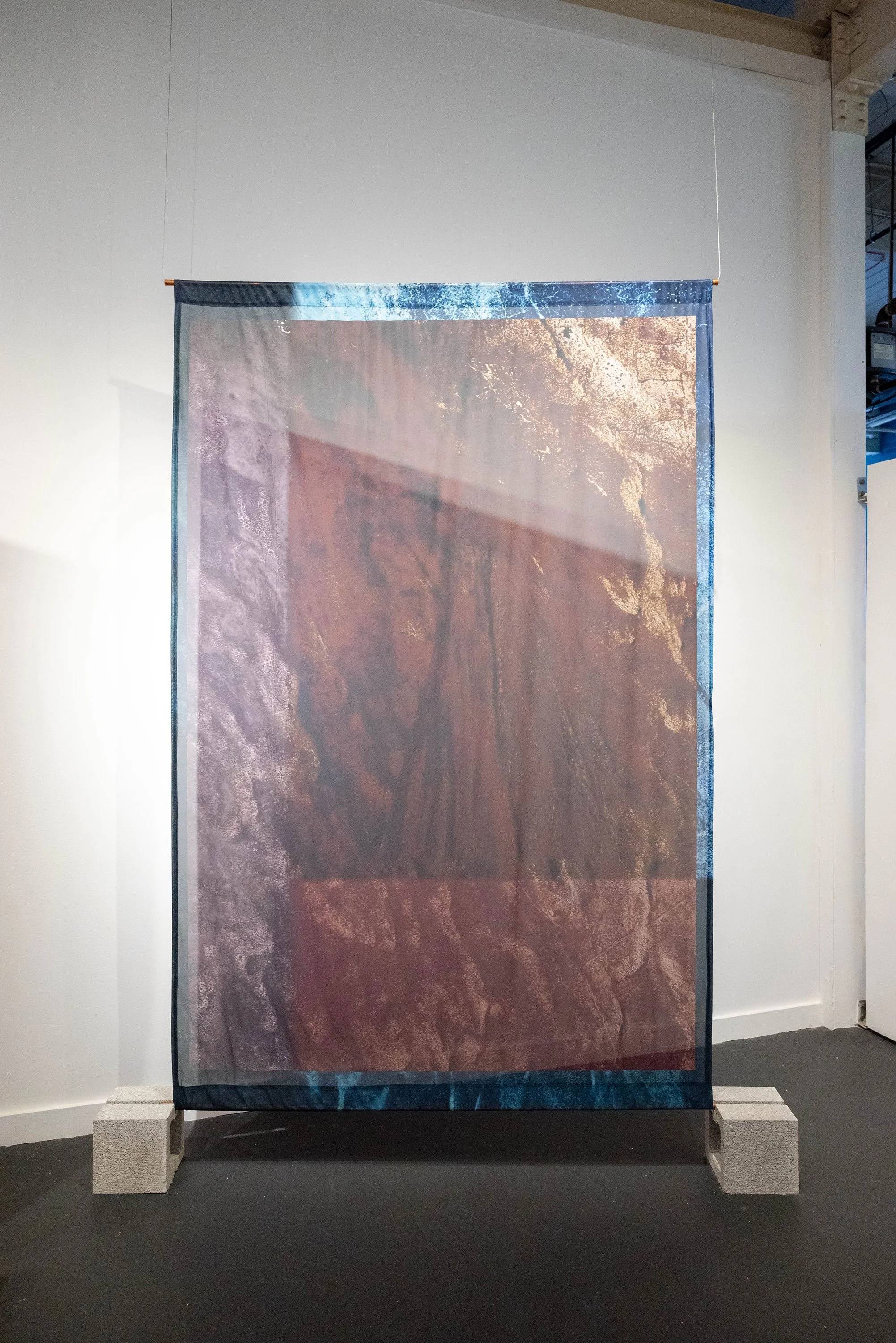
Dye sublimation prints on polyester, copper, cement blocks
5 x 8 feet (1.5 x 2.4 meters) each
2026
Context Fine Art, Cleveland, OH -
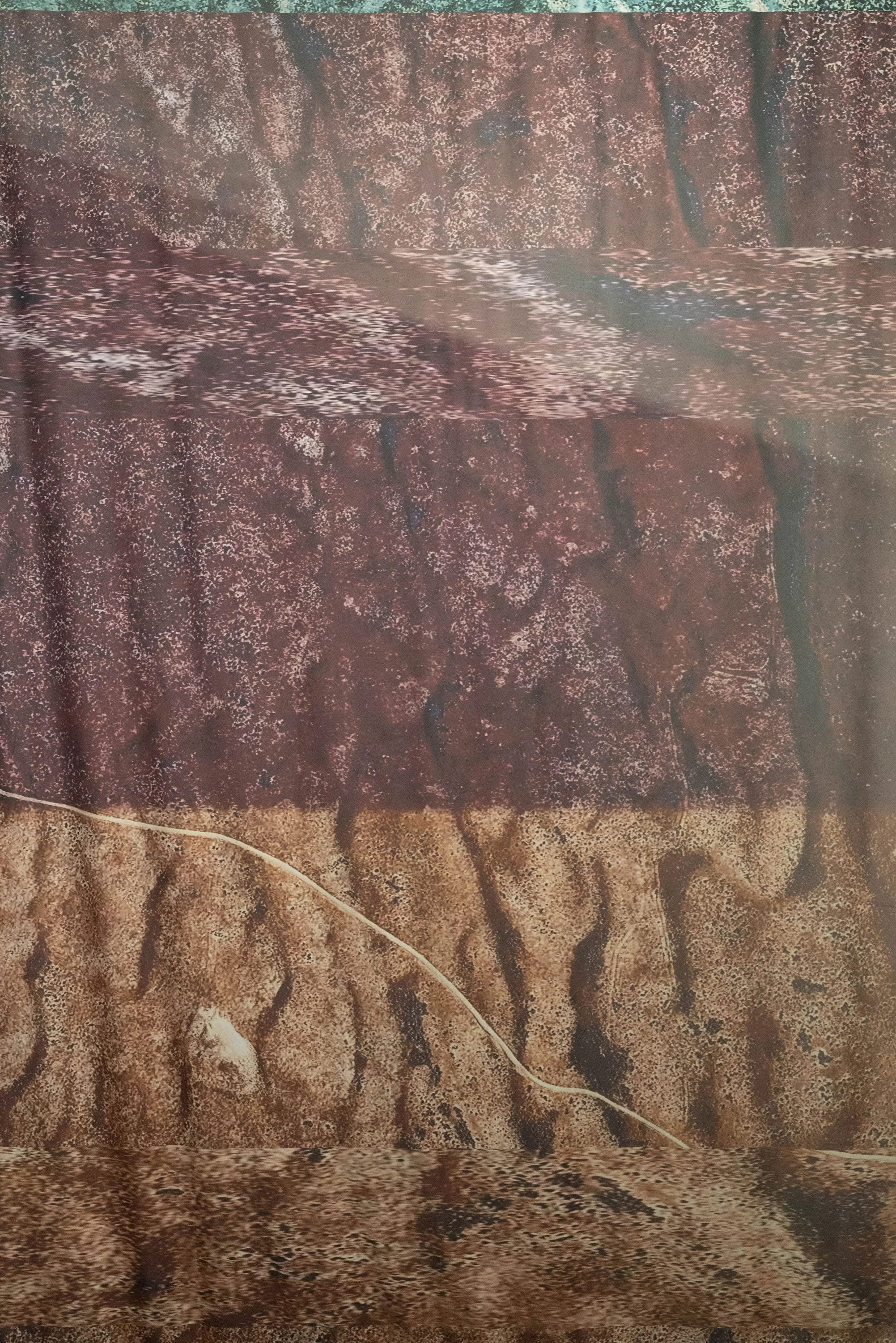
Hanford Observatories borrows imagery from satellite images of the Hanford site in Washington state, a large government superfund site and research center where the Pacific Northwest National Laboratory is based and one of the two new LIGO (Laser Interferometer Gravitational-Wave Observatory) experiments was built. In 2015, for the first time, these observatories recorded the ripples in space-time resulting from the collision of two black holes, proof of Einstein's quantum theory of relativity.
Although the second LIGO observatory is situated in Livingston, LA, this work focuses on the one in Hanford for personal reasons; I grew up in the Tri-Cities, WA, on the border of this government site and my parents worked at the national lab there from the time I was ten until I was 22.
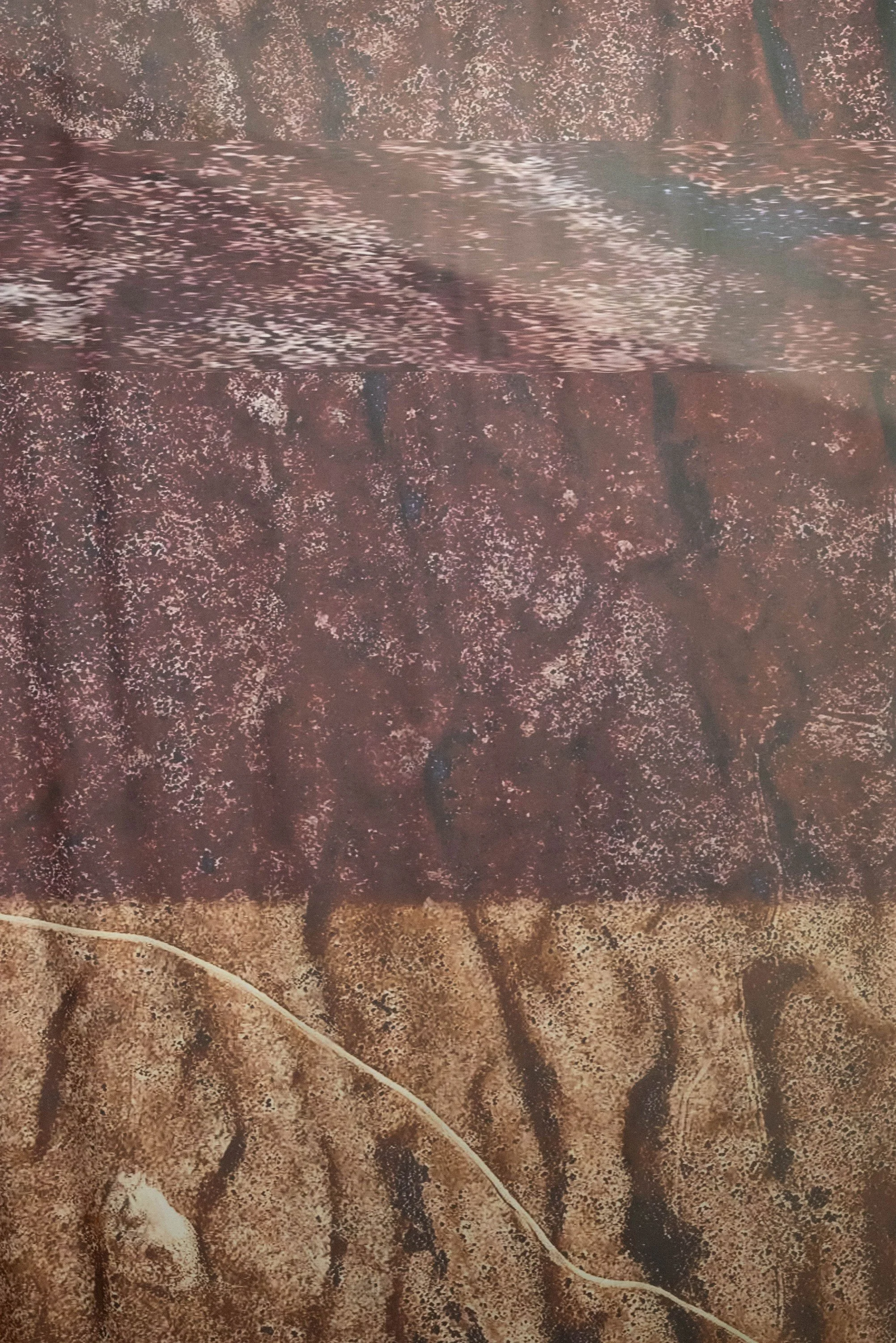
The works show close up images of the land around the LIGO observatory as it appears in a satellite view from Google Maps. Viewers will see roads and rolling hills as well as indications of the shrub-steppe desert landscape of the Columbia Basin. The colors are accurate to the original imagery with small adjustments to saturation.
The reason for the different colors is the way mapping programs stitch together images from different satellites passing overhead, usually collaging images from across five years or more in rural areas of the country. I'm interested in how the mapping programs show a collage of time and not just a single instance, something like looking at geological layers of earth across time. The different colors come from different atmospheric and light conditions when the satellites took the images, as well as the actual technology of the camera lens they use (Google Maps does not operate its own satellites, it aggregates imagery from other companies). In each composition, I've introduced a moment of distortion to nod to the ripples in space-time detected by the LIGO observatories. I'd like viewers to consider the feeling of space-time moving, pulsing, and pushing at the world around us.
This work was produced in 2026 for the exhibition Crystalline Lens at Context Fine Art in Cleveland, OH.